
What to Check Before Buying a Used Prime Mover
The compliance plate before the paint, the driveline before the chrome, and the one number that decides whether the truck can legally do your job at all.
A used prime mover is the largest single purchase most small transport businesses make, and the mistakes are not usually mechanical. They are specification mistakes — buying a truck that cannot legally or economically do the work intended.
1. Ratings and compliance
- GCM — Gross Combination Mass. The total the truck is rated to haul including itself. Check it against your actual loaded combination, not the theoretical one.
- GVM, axle ratings and suspension rating.
- Whether it is rated for the combination you intend: single trailer, B-double, or road train. A truck specified for single-trailer work may not be plated for a B-double.
- Emissions standard, which affects both AdBlue requirements and where the truck can operate.
- Compliance plate matching the VIN, and the VIN matching the papers.
Buying more rating than you need is not free either — heavier axles and suspension mean more tare weight, and tare weight is payload you never carry for the life of the truck.
2. Driveline — where the real money is
- Engine hours as well as kilometres. A truck with modest kilometres but very high hours has idled its life away, and idling wears an engine without recording distance.
- Any rebuild history, with invoices. A documented in-frame rebuild on a high-kilometre truck can be a genuine strength.
- Transmission: on a manual, check clutch travel and whether it selects cleanly. On an automated manual, test it under load — clutch actuator problems are expensive and not obvious cold.
- Diff and final drive service history. Oil analysis records, if they exist, are gold.
- Turbo and EGR condition, and whether the DPF has been serviced or simply ignored.
- Oil leaks. Locate the source rather than accepting "they all do that".
3. Brakes, tyres and suspension
- Brake lining thickness on every wheel, and drum or disc condition.
- Air system: listen for leaks with the engine off and pressure up. Time how long it takes to build.
- Airbag condition, and the ride height sitting level.
- Tyres — a full set on a prime mover is thousands. Check the date codes, not just the tread. Old tyres with good tread are still old tyres.
- Kingpin and fifth wheel wear, and whether the fifth wheel plate is scored or has excessive play.
- Steer tyre wear pattern, which reveals alignment and front-end problems.
4. Chassis and coupling
- Chassis rails for cracks, especially around the suspension hangers and the fifth wheel mounting.
- Evidence of a chassis repair or a wheelbase change. Both happen legitimately and both need documentation.
- Rust in the crossmembers, particularly on coastal trucks.
- Turntable height and whether it suits the trailers you will actually pull.
5. Cab, electrics and the driver
A prime mover is a workplace. If nobody wants to drive it, it does not earn.
- Air conditioning working properly. In Australia this is fatigue management, not comfort.
- Bunk condition if it is a sleeper, and whether the bunk restraint is intact and compliant.
- All lights and the trailer plug tested end to end.
- Fault codes read out from the ECU. Ask for it in writing.
- Seat and steering wheel wear against the odometer, for the same reason as an excavator's cab.
6. Paperwork, before money moves
- PPSR search to confirm no finance is owing. A few dollars; removes the risk of buying a truck the financier can repossess.
- Service history in documents, not description.
- Roadworthy or safety inspection status, in writing, including who performs it.
- Registration status and what transferring it to your state requires.
- Written confirmation of whether the price includes GST — this is a five-figure question on a prime mover and it is asked far too late.
Prime movers currently listed
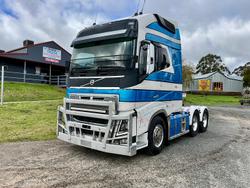
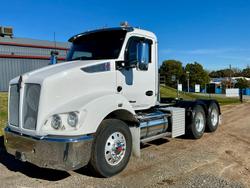
Recently listed prime movers
Read from our index on 10 August 2026 · 338 matching listings · median asking price $149,950 · $550 to $632,500
Common questions
What is the most important thing to check on a used prime mover?
The GCM rating on the compliance plate, before anything mechanical. It determines whether the truck is legally rated to haul your combination. A truck in beautiful condition that is not plated for the work is useless to you, and no amount of negotiating changes that.
Are engine hours or kilometres more important on a truck?
Read both. A truck with low kilometres but very high engine hours has spent its life idling, which wears an engine without accumulating distance. Metro and vocational trucks typically show high hours per kilometre; line-haul trucks show the reverse.
Do I need a PPSR search before buying a truck privately?
Yes, and before money changes hands. It costs a few dollars and confirms no finance is owing against the vehicle. Without it, a financier can repossess a truck you have already paid for.
Is a rebuilt engine a problem on a used truck?
Not if it is documented. A high-kilometre truck with an invoiced in-frame rebuild behind it may have more life remaining than an unrebuilt truck approaching the same milestone. What matters is evidence — an undocumented rebuild is just a claim.
Looking for something specific?
Search live stock from Australian dealers, or work out what a repayment looks like before you start.