
Buying a Used Truck: What Changes at 500,000 km
Used trucks are priced by age and kilometres, but they fail by component. Here is what actually comes due and when — so a cheap truck with a known expense ahead is a decision rather than a surprise.
Used truck pricing follows age and kilometres because those are the two numbers everyone can see. Trucks do not wear that way. They wear by component, on schedules that are broadly predictable — which means the question is never "is 600,000 km too many", it is "what is due next, and is it in the price".
Roughly what comes due, and when
| Stage | Typically due | Why it matters to the price |
| Under 300,000 km | Servicing, tyres, brakes | Little deferred. Priced accordingly. |
| 300–500,000 km | Clutch, injectors, turbo, suspension work | The first real bills. Ask what has been done. |
| 500–800,000 km | Major driveline attention, possible in-frame rebuild | Where documentation decides everything. |
| 800,000 km + | Rebuild done or imminent; diffs, gearbox | Either a rebuilt truck with life left, or a truck being sold ahead of the bill. |
The two trucks that look identical
At 650,000 km you will be shown two trucks at similar money. One has an invoiced in-frame rebuild, new injectors and a documented clutch at 500,000. The other has a service book with gaps and a very clean engine bay. The first is cheaper to own and it is not close.
The whole skill in buying a used truck is telling those two apart, and it is done with paperwork rather than intuition:
- Invoices for major work, naming the truck and its kilometres at the time.
- A service history with no unexplained gaps. Gaps are not disqualifying — they need explaining.
- Oil analysis records where they exist, which is more common on fleet trucks than people expect.
- The reason for sale, and whether it holds together. "Upgrading" from a fleet with a replacement cycle is a good answer.
Hours as well as kilometres
Two trucks at 500,000 km can have wildly different engine hours. A metro truck accumulates hours far faster per kilometre, and idling wears an engine while the odometer stands still. Ask for hours. If the truck cannot report them, that is itself a data point about how it was managed.
Where a cheaper truck is genuinely the right buy
- You have a workshop, or you are one. Deferred maintenance you can do yourself is a discount, not a risk.
- The work is intermittent. A truck doing 40,000 km a year is a different proposition from one doing 200,000.
- The expense is known, quoted, and financed alongside the purchase rather than met from next month's cash flow.
- The body or specification is worth more to you than the chassis condition.
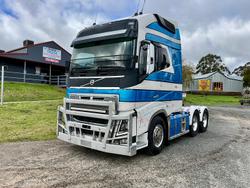
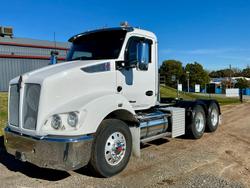
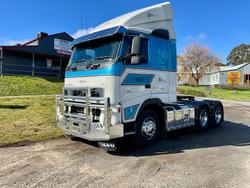
Used trucks currently listed
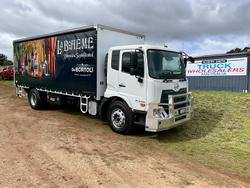
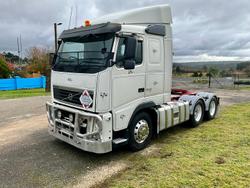
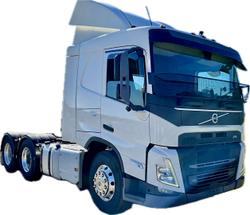
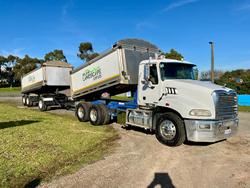
Recently listed used trucks
Read from our index on 10 August 2026 · 1,052 matching listings · median asking price $119,500 · $550 to $995,000

Common questions
How many kilometres is too many for a used truck?
There is no threshold. A heavy-duty truck with 800,000 km and an invoiced rebuild can have more service life ahead than one at 550,000 km with an undocumented history. What matters is which major components have been done, whether there is paperwork, and whether what is still to come is reflected in the price.
What major expenses should I expect on a high-kilometre truck?
Broadly: clutch, injectors, turbo and suspension work in the 300,000 to 500,000 km range, then major driveline attention and possibly an in-frame rebuild between 500,000 and 800,000. Application shifts these substantially — metro work brings clutch and brake costs forward considerably.
Is a used truck with a full service history worth the premium?
Usually yes. The premium for documentation is normally less than the cost of the one deferred repair you did not know about, and it is far easier to finance and later resell a truck whose history you can show.
Looking for something specific?
Search live stock from Australian dealers, or work out what a repayment looks like before you start.